2012年3月29日星期四

INTL 260 2012Winter Research Paper: The role of multinational corporations in social and political issues in developing countries: a case study of Royal Dutch Shell in Nigeria

Xiaorui Huang
INTL 260 Culture, Capitalism and Globalization
Research Paper
Grade: 99/100

The role of multinational corporations in social and political issues in developing countries: a case study of Royal Dutch Shell in Nigeria
Introduction
Given the inadequate living conditions and often undemocratic administration, the relationship between local people and governments in developing countries has its inherent social instabilities. When investing in these countries, multinational corporations inevitably involve in this relationship and usually become powerful forces that bring dramatic change to politics and society in host countries. As external forces, multinational corporations are often labeled as trouble makers when political and social issues occur in local community after their investment. However, the issues usually result from the intertwined impact of both corporate investment and pre-existing political and social instabilities. Through the case study of Royal Dutch Shell in Nigeria, this essay intends to investigate how these two causes intertwine with each other and the exact influences of multinational corporations on local communities in terms of politics and society. To facilitate the case study, the first part of this paper uses a general analysis to introduce and explain concepts that are necessary to understand this topic. After that, the case of Royal Dutch Shell in 1990s in Nigeria will be examined in detail. A conclusion will then be drawn about multinational corporations’ influence on social and political issues in developing countries.

General Analysis: Multinational Corporations and Nation States
With Royal Dutch Shell and its subsidiary Shell Petroleum Development Company of Nigeria (SPDC) as the key players in the case discussed later, addressing the concepts of business corporations and particularly multinational corporations are crucial. According to the Encyclopedia Britannica, a business corporation is a legal entity established based on the laws of a state to conduct business (“Corporation”). In most of countries, corporations enjoy eternal lifespan with privileges and limited liabilities unless being dismissed by court or by shareholders voluntarily. Legal personality, limited liability, transferability of shares, and hierarchical management controlled by a board structure are four general characteristics shared by most corporations in the world (Kraakman, and et al 2). When a corporation expands its business beyond a single country, it becomes a multinational corporation. A multinational corporation is has its management headquarters in one country and operates in several other countries through subsidiaries (“Multinational Corporation”). With their enormous financial power and extensive regional or even global network, multinational corporations have great influence on economics, politics and societies of their host countries especially those less developed countries whose local governments are rather incapable of administration. In addition, western multinational corporations control the means of production that developing countries are unable to develop and operate independently.
         Other than corporations, nation state is the other key concept in this study. Nigeria, during both the previous military dictatorship and the later democratic federation, has build-in instabilities largely due to its multi-ethnic nature. The corrupted and injustice Nigerian government, having its influence intertwined with Shell on local political and social issues, can be seen as a manifestation of these instabilities. Therefore, understanding the concept and functions of nation state in the culture of capitalism helps analyze the role of corporations in the following case. A nation state is a form of political organization under which a relatively homogeneous people inhabits a sovereign state (“Nation-state”). The formation of a nation state usually involves the weakening or even elimination of diversity among and independence of various ethnic groups within one nation. In the culture of capitalism, governments of nation states generally monopolize the legitimacy of violence within its borders (Robbins 106-09). With the progression of globalization and expansion of multinational corporations and international financial institutions, power of nation state especially periphery countries to control their domestic economies is impaired (Richard 87-88).

Case study: Royal Dutch Shell in Nigeria
       With the understanding of multinational corporations and nation states, we can now proceed to case study about Royal Dutch Shell in Nigeria. Royal Dutch Shell (as Shell in following context), whose operations cover nearly the entire oil and gas industry as well as major areas of renewable energy industries, is the second-largest energy company in the world (Forbes). Shell Petroleum Development Company of Nigeria (SPDC) is the primary subsidiary of Shell in Nigeria that mainly focuses on oil extraction. It is the operating partner holding 30 per cent share of a joint venture of which Nigerian government owns 55 per cent (Boele, Fabig and Wheeler 75).  Except for several temporary leaves, Shell has operated commercial oil production in Niger Delta since 1958 (Bird and Herman 43), which was accompanied by continuing complaints from residence of Niger Delta about environmental damage, unfair share of profits by local community and Shell’s suspect collusion with Nigerian government military and police force in brutal suppression of protest (Douglas and Okonta 2; Boele, Fabig and Wheeler 80). This case study focuses on Shell’s operations in Nigeria during 1990s when the conflicts among people in Niger Delta, Shell and Nigerian government experienced its most severe step and received most international attention.
       Shell has been accused of causing and worsening various social and political issues in Niger Delta, among which the most infamous is Shell’s involvement in using Nigerian government military and police force to violently suppress protesters. According to John Vidal, confidential documents released in 2009 show that in 1990s Shell “regularly paid the military to stop the peaceful protest movement against the pollution, even helping to plan raids on villages suspected of opposing the company.” It is immoral and illegal that Shell appealed to violence to deal with the peaceful protests. However, these human right violations were caused by the Shell’s corporate power and pre-existing social instabilities in Nigeria combined. On one hand, frequent inter-ethnic conflicts and regional turmoil, and a civil war occurred in Nigeria during 1960s and 70s due to its loose nation bonding, several replacements of military dictatorship and complex ethnic composition (Bird and Herman, 36-37; Douglas and Okonta 15). Considering these historical unrest and associated poor public security that lasted for years, it was understandable that Shell requested that police and government military to protect its facilities. On the other hand, Nigerian government has been known as severely corrupted since its independence (Litvin 258). Military and police force were given orders by generally corrupted senior government officials from three major ethnic groups who benefited greatly in the disproportional distribution of oil production profits (Rashid 96). Based on the inherent ethnic conflicts mentioned above and the fact that protesters required more profit stay in local communities, it is likely that the then military government did not regard minority people in Niger Delta as fellow countrymen but alien others who might decrease these officials’ income. In addition, Nigerian law obliges that companies to pay police force used to protect their facilities, which means Shell have to pay salary to police protecting its installations (Litvin 260).  All three factors form the breeding ground of the illegal and unethical collaboration between Nigerian government and Shell to repress peaceful protest with violence.
The other influence brought by Shell in Nigeria is that it contributed to long-term maintenance of the military dictatorship. Since its independence from the United Kingdom in 1960, Nigeria had been ruled under military dictatorship for more than 30 years. Shell’s commercial operations continued throughout the military regimes except for several temporary suspensions. According to Daniel Litvin, since 1950s till late 1990s, Nigerian governments’ total revenue from oil export had gone beyond 290 billion dollars, of which Shell as the largest operator was responsible for up to 80% (257). In this sense, Shell was the primary financial supporter of several military dictators. Nevertheless, the inherent social instabilities in Nigeria also played an important part in this issue. Specifically, the c combination of loose multi-ethnic nation state and highly lucrative but geographically unevenly-distributed oil resources made military dictatorship highly probable if not inevitable. Before independence, Nigeria was established through British colonialists’ coercively uniting various distinct ethnics under one single political entity (Douglas and Okonta 15-16). No strong cultural and religious bonds exist. Therefore, in democratic federation, it was extreme difficult for these ethnic groups to reach a unanimous arrangement of oil profit distribution when every group wanted to maximize its share but oil reserves concentrated in Niger Delta. In this case, powerful military officials were very likely to emerge as dictators and control all domestic oil reserves. Dictatorship is undemocratic, yet, it facilitates Shell’s operations since the company only needs to deal with the rulers for access to oil reserves in the whole Nigeria. In return, Shell paid a significant part of profit to the dictators. Therefore, to some degree, mutual benefits existed between Shell and military dictators.        
The third issue that Shell involved in Nigeria is the social inequality between majorities and minorities groups in terms of income gap. Nigeria is the 8th largest oil export country and its government has gained billions of dollars from its oil industry. However, according to World Databank during 1990s, around 80 per cent Nigerian people live under 2 dollar a day, and its GINI index was higher than 45, which indicates considerable income inequality in Nigeria. Both corporate investment of Shell and inherent social instabilities are counted for the income gap. Firstly, Shell generated huge profits for Nigerian governments. The major ethnic groups’ dominance of governments and the pervasive corruption caused that most profits generated in oil industry end up to be personal possession of elites of these groups. In other words, Shell indirectly helped increase the income of the upper class in Nigeria. Secondly, Shell’s production installations concentrate in Niger Delta, where many minorities groups live. While agriculture is the primary income source in Niger Delta, oil spillage and natural gas flaring, as side-effects of Shell’s operations, greatly polluted the residence, farmland and fishing creeks of local people (Douglas and Okonta 72-73). Based on its investigation in 1994, Greenpeace pointed out that Shell’s extensive aboveground pipeline network in Niger Delta frequently crossed farmland (qtd. Douglas and Okonta 77). The often oil spill from these high-pressure pipeline significantly degraded the productivity of farmland it went through. Although complaints and protests against pollution basically never ceased in 1990s, Nigerian governments were simply absent from the enforcement of environmental regulations (as specified in detail in the next paragraph), which indirectly connived Shell’s damaging local agriculture. Consequently, taking advantages of the mismanagement of governments, Shell’s operations decreased minority farmers’ income and impaired their self-sustainability. By increasing the income of upper class and decreasing the income of lower class, Shell, in the context of inherent environmental injustice between major and minor ethnic groups, enlarged the income gap and social inequality in Nigeria society.   
Together with Nigerian government, Shell also jeopardized the environmental justice in Nigeria. For Shell, it only operated in where oil reserve located but caused severely environmental damage. For the Nigerian government, it was dominated by major ethnics groups that not only benefit greatly from oil production but also largely exempted for the environmental damages as the major oil reserves located in land of minorities. In this case, government officials who barely lived with destructive environmental influence of oil production only focused on the profits. Given the pervasive corruption and mismanagement, governments tend to be reluctant to carry out and enforce environmental regulations. When spillage and other incidents occurred, local people reported to Shell but not the governments, even if they knew Shell often act sluggishly (Litvin 269-70). This fact indicates the absence of government in addressing pollution. Even after complaint about pollution from Niger Delta drew international attention, Nigerian governments rarely take actions to restrict eco-unfriendly operations of Shell. Thus, due to both Shell’s pollution and Nigerian governments’ incompetency, people from major and minor ethnic groups receive different treatment with regard to environmental regulations.
Other than worsening destructive issues, Shell was also partly responsible for its unsatisfactory community supporting measures. Shell claimed that more than $20 million was spent annually to support local communities and a new Community Programme Development Unit was established in 1997 by the company particularly to conduct community supporting projects (qtd. Boele, Fabig and Wheeler 83.). However, local people often criticize Shell’s effort of being ineffective and inadequate (Boele, Fabig and Wheeler 84). In my perspective, both Shell and Nigerian government were accountable for the ineffectiveness of these community developing projects. Nigerian governments’ mismanagement and corruption somehow made local communities largely depend on Shell both financially and executively. Nevertheless, as one Shell manager argues, “We’re an oil-producing company. We don’t have great expertise in development.” (qtd. Livtin 269) Shell itself was inexpert to take over the responsibility, appropriate governmental guidance was necessary, yet, absent.

Conclusion
During its operations in 1990s in Nigeria, Shell involved in various social and political issues including the use of violence to suppress protesters, long-term maintenance of military dictatorship, significant inter-ethnic income gap and environmental injustice, and ineffective community-support spendings. The corporation often worsened the problems both directly and indirectly. Nevertheless, Shell itself was not the only one to blame. The inherent instabilities of Nigerian society and politics, mainly stemming from the loose bonding of this nation state, often manifested as governments’ corruption and mismanagement, major ethnic groups’ dominance of politics, and brutal military dictatorship. These instabilities and associated manifestations both served as breeding ground of Shell’s misconduct and emerged as direct players that intertwined with Shell in social and political issues. Therefore,  multinational corporations act as forces that amplify or prolong problems of which the roots are set by pre-existing social and political instabilities. Corporations are single-minded for making profits, but their operations always cause unintentional influences on society and sometimes on politics. As indicated in this case, although we should definitely call for corporate social responsibility, it somewhat relies on nation-state or governments to steer these unintentional influences to be either positive or negative for the society.


Work Cited
Bird, Frederick, and Stewart Herman. International Buinesses and the Challenges of Poverty in the Developing World: Case Studies on GLobal Responsibilities and Practices. 1st ed. New York : Palgrave Macmillan, 2004. 43. Print.
Boele, Richard, Heike Fabig, and David Wheeler. "Shell, Nigeria and The Ogoni: A Study in Unsustainable Development: I. The Story of Shell, Nigeria and the Ogoni People – Environment, Economy, Relationships: Conflict and Prospects for Resolution." Sustainable Development. 9.2 (2001): 74-86. Web. 4 Mar. 2012. <http://onlinelibrary.wiley.com.libproxy.uoregon.edu/doi/10.1002/sd.161/abstract;jsessionid=2D6569D32E11B0277030A8315B839773.d01t02>.
"Corporation." Encyclopædia Britannica. Encyclopædia Britannica Online. Encyclopædia Britannica Inc., 2012. Web. 5 Mar. 2012. <http://www.britannica.com/EBchecked/topic/138409/corporation>. 
Douglas, Oronto, and Ike Okonta. Where Vultures Feast: Shell, HUman Rights, and Oil in the Niger Delta. 1st ed. San Francisco: Sierra Club Books, 2001. Print.
Forbes. "Royal Dutch Shell on the Forbes Global 2000 list." Forbes. N.p., n.d. Web. 4 Mar 2012. <http://www.forbes.com/companies/royal-dutch-shell/>.
Kraakman, Reinier, First , et al. The anatomy of corporate law : a comparative and functional approach. 1st ed. New York : Oxford University Press, 2004. 2. Print.
Livtin, Danel. Empires of Profit: Commerce, Conuest and Corporate Responsibility. 1st ed. New York: Texere LLC, 2003. 249-73. Print.
"Multinational corporation (MNC)." Encyclopædia Britannica. Encyclopædia Britannica Online. Encyclopædia Britannica Inc., 2012. Web. 3 Mar. 2012. <http://www.britannica.com/EBchecked/topic/397067/multinational-corporation>.
"Nation-state." Dictionary and Thesarus. Merriam-Webster Online. Encyclopædia Britannica Inc., 2012. Web. 3 Mar. 2012.
            http://www.merriam-webster.com/dictionary/nation-state.
Rashid, Khadijat . "Ethnic Politics and Ethnic Conflict Review of Ethnicity and Sub-Nationalism in Nigeria: Movement for a Mid-West State Review of Ethnic Politics in Kenya and Nigeria Review of Federalism and Ethnic Conflict in Nigeria." African Studies Review. 46.2 (2003): 92-98. Web. 5 Mar. 2012. <http://www.jstor.org.libproxy.uoregon.edu/openurl?volume=46&date=2003&spage=92&issn=00020206&issue=2&>.
Robbins, Richard. Global Problems And the Culture of Capitalism. 5th ed. Upper Saddle RIver: Prentice Hall, 2011. 87-88 & 106-09. Print.
The World Bank Group World Databank (2011): n.pag. World Databank: World Development Indicators (WDI) & Global Development Finance (GNF). Web. 5 Mar 2012. <http://databank.worldbank.org/ddp/home.do?Step=3&id=4>.
Vidal, John. "Shell oil paid Nigerian military to put down protests, court documents show." The Guardian. The Guardian, 02 OCT 2011. Web. 4 Mar 2012. <Shell oil paid Nigerian military to put down protests, court documents show>.

WR 123 2012Winter Research Essay: The Wolf in Sheep’s Clothing: Corporations and Corporate Personhood

Xiaorui Huang
WR 123 College Composition III - Academic and Research Writing
Research Essay
Grade: A


The Wolf in Sheep’s Clothing: Corporations and Corporate Personhood
On January 21, 2010, according to the First Amendment that guarantees freedom of speech, the United States Supreme Court decided that it was legal for corporations to spend unlimited amount of money on “electioneering communications.”[1] This 5-4 split decision in the case of Citizens United v. Federal Election Commission (FEC) marked a triumph for corporations and corporate personhood, yet, the ruling poses a huge threat to democracy and the public interest. Some voices praise the righteousness of this ruling in restoring the freedom of speech for corporate persons while the others worry about the potential long-term damage caused by the reinforced corporate personhood on our democratic society. Corporate personhood impairs democracy and infringes on public interests because it steers political elections, jeopardizes policy making, places corporate interests above public interests and instigates the abuses of corporate power by providing both legal and normative exemption from liabilities.
Corporate personhood refers to a status that corporations possess the same constitutional rights as natural human beings. Summarized by freelance writer Ted Nace, American corporations has gained various constitutional rights from judicial rulings through a process of more than one hundred year (16-17). Begin with the Santa Clara v. Southern Pacific case in 1886 in which corporations became encompassed by the Equal Protection Clause[2], almost all constitutional rights have been entitled to corporations by judicial creation (Nace 16-18, 167-168). In 1976, the Supreme Court equated political donation with freedom of speech in the case of Buckley v. Valeo, and virtually invalidated restriction on indirect corporate spending on campaigns[3], which started a upsurge of corporate influence in politics. Nevertheless, as shown by the pro-regulation court decisions in Austin v. Michigan Chamber of Commerce in 1990, McConnell v. Federal Election Commission in 2003, and several other cases, direct corporate spending on campaign speech[4] was somewhat restricted in judicial rulings due to its highly contentious association with both the inviolable freedom of speech and sensitive political democracy. In the case of Citizens United v. FEC, however, the Supreme Court overturned several precedents and greenlighted unlimited corporate spending on direct campaign speech, which installed a new powerful weapon on the armor of corporate personhood.
Through the cloak of corporate personhood, corporations have gained legal permission for unlimited campaign spending in both direct and indirect ways, and become unprecedentedly powerful players in politics who can steer democratic elections.
This is because corporations with their abundant capital actually dominate costly battlefield of campaign advertising on mass media. According to a study on 2004 U.S. presidential and Senate election by political science professors Michael Franz and Travis Ridout, such political advertising has significant impact on voter perception of candidates’ abilities and positions (485-486). Since such advertising is very effective in change public acceptance of candidates, the competition on mass media could probably shape the election results. Brian Lane, a leader of a social justice advocate group, in his study discovered that in 94% of the races for 2000 elections in House of Representatives, the candidate who raised the most funds won. As this reveals, with the control of this battlefield in hand, corporations gain the power to steer political election.
By using their person-like constitutional rights to steer elections of legislators, corporations jeopardize democratic policy-making. In supporting campaigns of politicians, corporations usually require their future favoritism in policy making. Consequently, the results of such campaigns are very likely to be pro-corporation legislative bodies. Thus, the legislative become crony of corporations and tend to approve policies that are beneficial to corporations while hinder the enactment of business regulations.
Even in a pro-corporation legislative, regulations that restrict corporate power sometime get passed. When this happens, corporations always use their personhood as a trump in litigation to dismantle these anti-corporation regulations. Specifically, corporations can always found these regulations violate their constitutional rights as human and appeal to the court to outlaw these regulations (Nace 12). A typical example of how corporations play this trump card is the case of Citizens United v. FEC. In this case, the corporation Citizens United intended to broadcast a film and related advertisements through mass media to criticize then Senator Hilary Clinton within 30 days before a primary election, which was ruled by a local court as violating the 2002 Bipartisan Campaign Reform Act (BCRA) that restricts corporate spending on “electioneering communications.” In order to defend its political influence, Citizens United appealed to the Supreme Court and argued that the BCRA infringed its freedom of speech. The court favored Citizens United and outlawed the BCRA.  Based on the decision of the Supreme Court, corporations can spend unlimited money on “electioneering communications”. This case shows that even when some anti-corporation regulations passed legislative, they are likely to be dismantled by corporate personhood in court. In this sense, corporate personhood jeopardizes policy-making by both offensively creating corporate favoritism in legislative and defensively deregulating enacting anti-corporation regulations in judiciary.
By influencing elections and legislation, corporations ultimately aim to maximize their own interests. During this process, public interests are unavoidably compromised or even sacrificed. Several methods have been used by corporations to do this, among which the most effective way is the “revolving door”[5]. According to the Appointments Clause in the U.S. Constitution, heads of executive departments and agencies are assigned by the president with the approval of the Senate. As discussed above, corporate personhood gives corporations the power to influence all elective positions including the president and senators. Therefore, heads of executive departments and agencies are selected under the indirect influence of corporations. To please their corporate donors, politicians tend to choose candidates favored by corporations to direct executive agencies. A large part of these candidates are ex-employees in industries. These people, with their personal connection in corporations, tend to be partial to corporations in their terms of office. James Connaughton, former chairman of the White House Council on Environmental Quality and former director of the White House Office of Environmental Policy, is a notorious  “revolving door” figure. He served as corporate attorney and lobbyist for utilities and chemical industries before entering George W. Bush administration. As unveiled by author and activist Jim Hightower, Connaughton involved in cutting down the restrictions of the usage of arsenic in drinking water, and has contributed to the administrations’ reluctance in addressing the industrial causes of climate change through his advising to the president. Many “revolving door” examples exist between food industries and governmental watchdogs like the Food and Drug Administration, between energy and chemical industries and environmental regulatory agencies, and between defense contractors and the Pentagon. All these officials somewhat align governments’ goal with corporate interests. Governments no longer mean to protect people but to protect corporations, which usually acts under the mask of promoting economic growth. In this sense, to regulate corporations for public interest, people not only have to get regulations pass the corporate-steering legislation, but also need to bypass the throttling hands of all these officials, which is extreme difficult. In contrast, corporations can easily invalidate existing regulations through the same mechanism. Consequently, an unlevel playground that favors corporate interest over public interest is created in administration offices.
Besides the “revolving door”, corporate personhood also effectively helps defend corporate interests in court, which can be demonstrated in the case that diary industry in Vermont filed a lawsuit against a state legal act that mandated labeling of milk produced through recombinant bovine growth hormone (rBGH) (Lane 25). rBGH is a genetically modified hormone commonly used in American dairy to increase milk production. According to the study of noted medical science scholar Samuel S. Epstein, although rBGH itself has been approved by the U.S. Food and Drug Administration as safe to use, the injection of rBGH into cows induces significantly increase in the rate of udder infection, which necessitates high-dose-antibiotic injections that causes inevitable residues in milk. Because of this hazardous side-effect, most developed countries have banned the use of rBGH in dairy industry (Akre). Considering the well acknowledgement of health hazards of using rBGH to produce milk, it is at least justified if not urgent to label the products using it in marketplace for the sake of consumers. However, the dairy industry appealed to the court and argued that this law violated its right of negative speech[6] derived from the First Amendment, and the judge favored the industry and invalidates the labeling requirement (Lane 25). This case clearly shows that corporate personhood enables corporate interest to override the public interest in court.
Other than making democratic legislation and public interest in jeopardy, corporate personhood also instigates the abuse of corporate power by exempting them from consequent liabilities. In the case of The Unraveling of People v. Pacific Lumber and People v. Debi August in 2004, Pacific Lumber company was charged for purposely reporting faulty data to the California Department of Forestry in order to log 100,000 more trees on a unstable slopes, which increased the possibility of landslides by nearly 50 per cent and endangered nearby communities (qtd. in Bevington 101-02). This case was filed by the district attorney for the interest of local residents. However, the company’s argued that based on the right to petition the government listed in the First Amendment, it was constitutional to deceive when lobbying the governments (Sims). Eventually, the judge accepted Pacific Lumber Company’s argument and dismissed the case, and the company remained unscathed after lying to state government and imperiled several villages under the dangers of landslides. It is apparent that corporate personhood provides constitutional shields and grants corporations liability exemption for what they have done, which encourages the abuses of corporate power.
Other than directly supporting the abuse of corporate power, corporate personhood also reinforces a “corporation first” mindset and encourages the abuse in a subtle way. As psychologist Dennis Fox points out, through portraying corporations as persons, corporate personhood excludes the influence of personal social responsibilities of corporate executives on corporate operations by defining these executive as parts of the corporate person rather than distinct natural persons (342-343, 349). Consequently, any responsibilities other than maximizing profits are detached from the whole chain of corporate commands and a dangerous “corporation first” mindset is formed. This mindset, manifesting as Milton Friedman’s argument that the only responsibility of business corporations is to maximize profits within the legal framework of a society, falsely justifies and encourage corporate malfeasances because these malfeasances, even though unethical, are usually profit-oriented and constitutional (154).
When considering the society as a whole, corporate personhood as the primary booster of corporate power is harmful. A trend of expanding income inequalities of American society along with the rise of corporate power has existed for more than two decades. From late 1970s to early 2000s, the corporate power has increased and politicians’ opinions toward corporations gradually became positive (Nace, 139-150). During the same period, compensation for corporate executives has increased 600% while the average American's median wage and purchasing power have slightly dropped (Lane 26). Besides, the GINI ratio[7] of America (after taxes and transfers) has increased from 0.316 to 0.357, which indicates a national trend of expanding income gap among different social classes (OECD). In 2000, America has become the second most unequal countries among OECD countries in terms of wealth distribution (OECD). These statistics show that corporate power has risen with the stagnation of the general well-beings of Americans. In other words, corporate personhood undermines the public interest of Americans through its significant contribution to corporate power.
In spite of all the destructive impacts of corporate personhood on democracy and public interests as discussed above, voices exist arguing that corporations should enjoy all constitutional rights of natural person because they legally equates person at the first place. As legal scholar Bradley Smith claims, corporations should possess similar constitutional rights as natural person because they are entities created by natural person. Besides, Smith argues that it is unreasonable to deprive constitutional rights of corporations just because they enjoy benefits like limited liability and perpetual life that are legitimized in the state and the federation.
However, even leave along all the harmful side-effects of corporate personhood, corporations are essentially non-human as shown in their disrespect to this identity. In the ongoing case Kiobel v. Royal Dutch Petroleum that 12 Nigerian plaintiffs sue Royal Dutch Petroleum for aiding and abetting former Nigerian military government to suppress protestors through violence, Royal Dutch Petroleum argues that being a corporation instead of a “natural person”, it should be exempted from the liability for international human rights violation (Sacks). In this case, fundamental contradiction exists between corporations’ denial of personhood and their passionate claim of human rights in previous cases. This contradiction reveals that corporations have no concern about their personhood once their corporate person identity hurts their profits, which disproves their personhood as we natural persons will never deny our human identity even if its associated liabilities may lead to losses. Therefore, corporations’ disrespect for their divine identity of “person” unveils their inhuman nature.
Corporate personhood enables corporations to steer elections, jeopardize democratic legislations. Besides, it helps place corporate interest above the public interest and instigates the unethical use of corporate power. Ultimately, corporate personhood impairs our political democracy and infringes on the public interest. If the corporate personhood continues to be reinforced and associated constitutional rights extended, the integrity of our society may collapse. To address the threat posed by corporation and corporate personhood, the foremost step is to invalidate the notion of “corporate person” by proposing new constitutional amendment. As suggested by social justice activist Jan Edwards, a bottom-up approach should be used to outlaw corporate personhood from local town, to state, and eventually eliminate corporate personhood in the Federal Constitution (32).


Works Cited
Akre, Jane. "Monsanto Dairy Hormone Division for Sale Amid Consumer Concerns." Injury Board National Newsdesk. Injury Board, 06 Aug. 2008. Web. 23 Mar. 2012. <http://news.injuryboard.com/monsanto-dairy-hormone-division-for-sale-amid-consumer-concerns.aspx?googleid=245218>.
Amendment I to the United States Constitution, 1791. US Constitution. Legal Information Inst., Cornell U Law School, n.d. Web. 20 Mar. 2012.
              < http://www.law.cornell.edu/constitution/billofrights#amendmenti>
Amendment XIV to the United States Constitution, 1868. US Constitution. Legal Information Inst., Cornell U Law School, n.d. Web. 20 Mar. 2012.
              < http://www.law.cornell.edu/constitution/amendmentxiv>
Article Two of the United States Constitution, 1787. US Constitution. Legal Information Inst., Cornell U Law School, n.d. Web. 5 Mar. 2012.
              < http://www.law.cornell.edu/constitution/articleii#section2>
Austin v. Michigan Chamber of Commerce. 494 US 652. Supreme Court of the US. 1990. Legal Information Inst., Cornell U Law School, n.d. Web. 20 Mar. 2012.
            < http://www.law.cornell.edu/background/campaign_finance/88-1569.html>.
Bevington, Douglas. The Rebirth of Environmentalism: Grassroots Activism from the Spotted Owl to the Polar Bear. Washington: Island Press 2009. 101-02. Print.
Bipartisan Campaign Reform Act of 2002. Pub. L. 107-155. 116 Stat. 81 thru 116. 27 Mar. 2002. Web. 5 Mar. 2012.
            <http://www.gpo.gov/fdsys/pkg/PLAW-107publ155/content-detail.html>.
Buckley v. Valeo. 424 US 1. Supreme Court of the US. 1976. Legal Information Inst., Cornell U Law School, n.d. Web. 21 Mar. 2012.
            < http://www.law.cornell.edu/supct/html/historics/USSC_CR_0424_0001_ZS.html>.
Citizens United v. Federal Election Commission. 558 US 08-205. Supreme Court of the US. 2010. Legal Information Inst., Cornell U Law School, n.d. Web. 5 Mar. 2012.
            <http://www.law.cornell.edu/supct/html/08-205.ZS.html>.
Edwards, Jan. “Challenging Corporate Personhood: Corporations, the U.S. Constitution and Democracy.” Multinational Monitor 23.10/11 (2002): 30-32. Web. 22 Mar. 2012.
<http://web.ebscohost.com/ehost/pdfviewer/pdfviewer?sid=4bac4a73-3ccb-4e6d-b5d9-11cd1459ba02%40sessionmgr13&vid=8&hid=12>.
Epstein, Samuel. "Safe as Milk: The Story behind Bovine Growth Hormone." Bioneers. Bioneers, n.d. Web. 21 Mar. 2012. <http://www.bioneers.org/programs/food-farming-1/articles-interviews/safe-as-milk-the-story-behind-bovine-growth-hormone>.
Fox, Dennis. "The Law Says Corporations are Persons, but Psychology Knows Better." Behavioral Science & the Law 14.3 (1996): 339-59. Web. 27 Feb. 2012. <http://onlinelibrary.wiley.com.libproxy.uoregon.edu/doi/10.1002/(SICI)1099-0798(199622)14:3<339::AID-BSL246>3.0.CO;2-7/citedby>.Franz, Michael, and Travis Ridout. "Does Political Advertising Persuade?" Political Behavior 29.4 (2007): 465-91. Web. 20 Mar. 2012. <http://www.springerlink.com.libproxy.uoregon.edu/content/n451665g213q8129/>.
Friedman, Milton. “The Social Responsibility of Business IS to Increase Its Profits.” Ethical Issues in Business: A Philosophical Approach. Eds. Thomas Donaldson and Patricia Werhane. 6th ed. Upper Saddle River: Prentice Hall, 1999. 154-59. Print.
Hightower, Jim. "A Dirty Dozen." Utne.com. Ogden Publications, Jun. 2006. Web. 14 Mar. 2012.
<http://www.utne.com/2004-06-01/a-dirty-dozen.aspx>.
Lane, Brian. "The Abuses of Corporate Personhood." USA Today Magazine. Society for the Advancement of Education, May. 2004 Web. 21 Mar. 2012. <http://web.ebscohost.com.libproxy.uoregon.edu/ehost/detail?sid=a4840f87-71c1-4f73-85ce-467a0b953434@sessionmgr111&vid=1&hid=113&bdata=JnNpdGU9ZWhvc3QtbGl2ZSZzY29wZT1zaXRl>.
McConnell v. Federal Election Commission. 540 US 93. Supreme Court of the US. 2003. Legal Information Inst., Cornell U Law School, n.d. Web. 20 Mar. 2012
            < http://www.law.cornell.edu/supct/html/02-1674.ZS.html>.
Nace, Ted. Gangs of America: The Rise of Corporate Power and the Disabling of Democracy. San Francisco: Berrett-Koehler, 2003. Print.
Organization for Economic Co-Operation and Development. Income distribution. OECD, n.d. Web. 20 Mar. 2012. <http://stats.oecd.org/Index.aspx?QueryId=26067&Lang=en>.
Sacks, Mike. "Corporate Personhood Debate, Tortured Reasoning In Tow, Heads Back To Supreme Court." HuffPost Politics. HuffPost News, 16 Dec. 2011. Web. 4 Mar. 2012. <http://www.huffingtonpost.com/2011/12/15/corporate-personhood-supreme-court-shell-oil_n_1150971.html>.
Sims, Hank. "Case Dismissed: The Unraveling of People v. Pacific Lumber and People v. Debi August." North Coast Journal Weekly. North Coast Journal, 7 Jul. 2005. Web. 21 Mar 2012.
<http://www.northcoastjournal.com/070705/cover0707.html>.
Smith, Bradley. "Corporations Are People, Too." National Public Radio. National Public Radio, 10 SEP. 2009. Web. 12 Mar. 2012. <http://www.npr.org/templates/story/story.php?storyId=112711410>.
United States. Census Bureau. "Current Population Survey." Definitions. U.S. Census Bureau, n.d. Web. 7 Mar. 2012.
            <http://www.census.gov/cps/about/cpsdef.html>


[1] Electioneering communications refer to broadcasting advertisements mentioning a candidate (Bipartisan Campaign Reform Act of 2002).
[2] The Equal Protection Clause refers to “no State shall make or enforce any law which shall abridge the privileges or immunities of citizens of the United States; nor shall any State deprive any person of life, liberty, or property, without due process of law; nor deny to any person within its jurisdiction the equal protection of the laws” (U.S. Const., amend. XIV, sec. 1).
[3] Indirect spending on campaign speech refers to donating money to candidates or electioneering groups and supporting mass communication activities created by them.
[4] Direct corporate spending on campaign speech refers to corporations’ investing money directly to mass communication activities associated with election candidates.
[5] “Revolving door” refers to the transfer of personnel among government agencies (especially watchdog groups), legislative, and industries.
[6] Negative speech refers to “the right not to help spread a message with which it disagrees” (qtd. in Nace 237)
[7] The Gini ratio (or index of income concentration) is “a statistical measure of income equality ranging from 0 to 1. A measure of 1 indicates perfect inequality; i.e., one person has all the income and rest have none. A measure of 0 indicates perfect equality; i.e., all people have equal shares of income” (The United States Census Bureau).


2012年3月9日星期五

WR 123 2012 Winter Short essay: Corporate Farming and Food Quality in America

Xiaorui Huang
WR 123 College Composition III - Academic and Research Writing
Short essay
Grade: A-

Corporate Farming and Food Quality in America
No matter who you are, where you are from, or how old you are, you need food to survive. A sufficient food supply with reliable quality is, therefore, of the utmost importance. Since the late nineteenth century, along with the population growth and the second industrial revolution, new technologies and business models appeared in agriculture to increase food production and ensure supply. This trend gave birth to corporate farming that has been thriving in recent decades. Today, with mega food producers like Archer Daniel Midland and Tyson Foods ranking in the top 100 largest American corporations (Fortune 500), corporate farming has dominated the agribusinesses in America. However, in this highly productive model, food quality has been compromised to ensure supply. Corporate farming undermines food quality because it degrades food nutrition value, threatens food safety, inhibits constructive competition from independent farming, and hinders the transparency of food production.
Some may argue that corporate farming helps maintain a reliable food quality as incorporations usually apply standardized processes to food growth and production. Proponents of corporate farming explain that standardization eliminates the previous quality variations due to free, independent farming. Besides, with the means of production controlled by fewer hands, it becomes easier for government agencies and food producer guilds to establish unanimous product standards on a regional or even national scale. These standards, besides their regulatory function, also serve as guidelines for companies to formulate intra-corporate standardization, and for non-governmental organizations and even individual consumers to evaluate food quality. Those corporations whose products cannot conform to these standards will have to either make improvements or withdraw from the market. Consequently, food production as a whole can achieve an adequate quality.
The standardization of corporate farming has indeed encouraged the development of the food industry by setting a model of efficient food production, yet, it lowers nutrition value of food. Supporters of corporate farming base their arguments on the premise that if a specific food product meets standards that allow it enter markets, it is qualified and healthy. However, these standards, either established by government agencies or producer guilds, are problematic. In common practice, the quality check specified in product standards mainly focuses on appearance, weight, and other external properties, but neglects the real quality of food, its nutrition value. For instance, United States Standards for Grain, the authoritative product standards regulating thirteen major grains growing in America, have no coverage of nutrition value ("Grain Inspection, Packers & Stockyards Administration"). Without corresponding regulations, nutrition value has been sacrificed in corporate farming for maximizing profits. A typical example is the nutrition degradation of tomatoes. Food writer Barry Estabrook calls for attention to the shocking fact that nutrition contents of 100 gram tomatoes have shrunk by 62 percent on calcium, 30 percent on vitamin C and thiamin, and 19 percent on niacin since 1960s (x). As one of the crops whose growth and production are heavily encroached by corporate farming, the regression of tomato quality indicates that food corporations are largely responsible for nutritious degradation of food.
Not only making food less nutritious, corporate farming also threatens food safety by its highly industrialized processing along with the abuses of chemical fertilizers, herbicides, and pesticides. Although from farmland to supermarket storage rack, a specific food product must experience several checks on chemical residues, contaminants, and allergens by multiple parties, potential health risks remain. Until February 16, the United States Department of Agriculture (USDA) has already announced seven food recall alerts due to contaminations in this year. Also according to the research of the USDA, tomatoes that supply for supermarket contain more than thirty pesticides’ residue (qtd. in Estabrook xiii). These facts reveal a lowered food safety under corporate farming, which is caused by the truth that for certain products the uses of chemicals are so substantial that post-processing cannot lower the residue enough to pass the chemical residue check. In such cases, food corporations tend to take advantages of loopholes in imperfect regulations rather than to reduce the uses of chemicals during farming and processing. For example, in their study about the U.S. governmental regulation of industrial pesticide use, biologist Jennifer Sass and attorney Mae Wu point out that the U.S. Food and Drug Administration (FDA) rarely renew their legal standards for early-registered pesticides even if later studies suggest a stricter control on their residue. Consequently, the legally allowable residues of early-registered pesticide are usually higher than their newly-registered counterparts that are tested comprehensively through advance technology. Targeting at this loophole, food corporations prefer early-registered pesticide so that they can maintain a substantial use that will cause high residue. As a result, official regulation-conformed foods that are supposed to be safe can actually contain excessive poisonous chemical residues.
The reduced food nutrition and food safety of corporate farming is a result of imperfect standardization, which is almost inevitable because of the detachment of decision-making from farmland. In agribusiness companies, the internal standard of food growth and inspection are often decided by board members who barely have specialized knowledge about and direct contact with the production process and products themselves. These people focus on yield, efficiency, and ultimately profits. Therefore, the standards they make for their companies aim to exploit “profitable loopholes” in governmental regulations, maximize unit yield, facilitate transportation and warehousing, and promote marketing. What are neglected in corporate farming are those “invisible” factors, like nutrition values, chemical residues and health risks.
In addition to producing unsatisfactory food by themselves, food corporations also jeopardize the general quality of the food supply by suppressing their independent farming competitors who can produce nutritious food in a more natural way. Under the influence of corporations, food guilds usually set requirements on the external properties of food products that are too strict for independent farmers to meet without heavily chemicalized production. Take tomatoes as an example, as Barry Estabrook points out, tomatoes grown through traditional methods, though usually much more tasty and nutritious than corporate farming tomatoes, are treated as unqualified by Florida Tomato Committee due to their nonstandard shape and color (xii). As a Federal Market Order dictating export of tomatoes from South Florida, Florida Tomato Committee, with the support from food corporations, makes the sale of independent farming tomatoes illegal. Consequently, corporate farming puts independent farmers out of business and hinders the supply of healthy food.
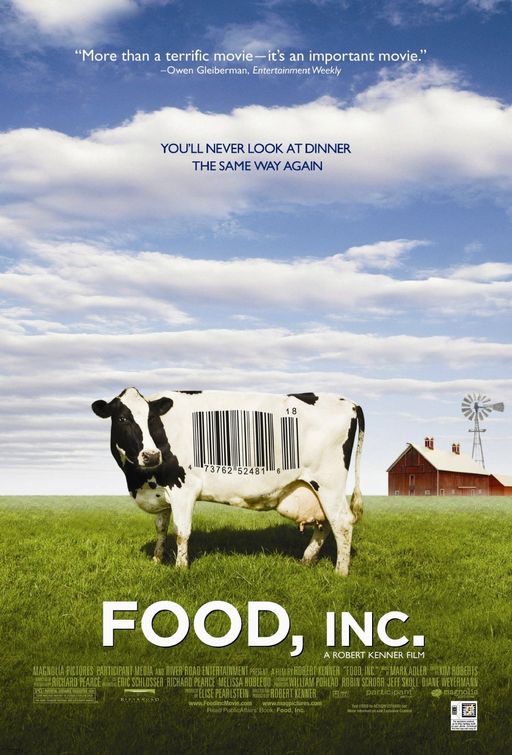
Corporations’ controlling food committees is but the tip of the iceberg of the hindered transparency of food production. In the food industry, transparency is maintained by the collaboration of legislation’s policy making, execution’s supervising, and judiciary’s regulating. However, food corporations’ influence permeates all three parts of the national state. A typical example is agribusiness corporation Monsanto. It has several former employees taking senior positions in the FDA, Environmental Protection Agency, and the Supreme Court (Food, Inc.). According to the data given in Food, Inc., the number of food safety inspections conducted by the FDA in 2006 was less than one fifth of the number in 1972. The reduced inspection could have meant well-maintained food safety, yet, the frequently issued food recalls suggest otherwise. Therefore a more likely explanation for the reduced inspection is that the regulatory system has been impaired by food corporations, which results in a reduced transparency in food production.
Although corporate farming has brought us a more uniform food supply, its profit-oriented nature unavoidably lowers nutrition value of food, threatens food safety, harms constructive market competition and hinders the transparency of food production. Without effective regulating, corporate farming ultimately undermines food quality. To address this issue, firstly we need to overcome the powerful barriers set by food corporations in our state apparatus, which cannot be achieved without a well-informed public. Therefore, as the steppingstone of solving food quality and safety issues, efforts are called for to unveil the truth of corporate farming to public.


Works Cited
Estabrook, Barry. “Introduction: On the Tomato Trail.” Tomatoland: How Modern Industrial Agriculture Destroyed Our Most Alluring Fruit. Kansas City, MO: McMeel, 2011. ix-xvii.
Food, Inc.. Dir. Kenner Robert. Magnolia Pictures, 2009. DVD.
"Fortune 500: Industry: Food Production." Fortune 500 (2011): Fortune 500 2011. Web. 8 Feb 2012. <http://money.cnn.com/magazines/fortune/fortune500/2011/industries/197/index.html>.
Sass, Jennifer, and Mae Wu. "US Pesticide Regulation: Weaknesses, Loopholes, and Flaws Undermine Farmworker Health." Physicians for Social Responsibility. N.p., 27 AUG 2011. Web. 21 Feb 2012. <http://www.psr.org/environment-and-health/environmental-health-policy-institute/responses/us-pesticide-regulation.html>.
United States. Department of Agriculture Food Safety and Inspection Service. Current Recalls & Alerts (Open Federal Recall Cases for FSIS). USDA FSIS, 17 Feb. 2012. Web. 19 Feb. 2012.
            <http://www.fsis.usda.gov/FSIS_Recalls/Open_Federal_Cases/index.asp>
"U.S. Standards for Grain." Grain Inspection, Packers & Stockyards Administration. United States Department of Agriculture, 07 Jul 2010. Web. 20 Feb 2012. <http://www.gipsa.usda.gov/fgis/standproc/usstands.html>.

2011年12月1日星期四

WR 121 2011Fall Essay 3: Occupy Wall Street: Time to week up from the dream

Xiaorui Huang
WR121 College Composition I
Essay 3
Grade: A
 
Occupy Wall Street: Time to week up from the dream
The Occupy Wall Street (OWS) series of nationwide demonstrations has lasted for 90 days and is expected to continue and expand. Speaking for both middle and lower classes, the OWS gains consents, if not support, from plenty of people and social groups. However, accusation and vilification from the rich and politicians against the protests have never ceased. A well-known example is from Herman Cain, a 2012 Republican presidential candidate. Cain argues about the protestors “Don’t blame Wall Street, don’t blame the big banks, if you don’t have a job and you’re not rich, blame yourself!” While attributing all miseries of those who suffered to their personal responsibilities, Cain based his statement on the ideology of American Dream that everyone has equal opportunity to succeed and those who pay efforts will be rewarded. However, the OWS, what Cain criticizes, unveils exactly the fact that American Dream is merely a myth because the protests show how corporate power makes the society unequal by differentiating people’s life chance by influencing job market, the real estate market and the government policy making.
Cain’s argument is not unpopular. His relentless words earned cheers at the Republicans presidential debates. Those who agree with Cain may argue that the lower classes deserve no more than what they possess currently because that is what their personal efforts and competency can give them. By taking stance with the long-time ethos of American Dream, which defined by writer James T. Adams as a “dream of a land in which life should be better and richer and fuller for everyone, with opportunity for each according to ability or achievement”. According to this definition, the American playing field is equal; everyone will get their niches according to their competency and efforts. Paupers take drugs and suffer, the wealthy work and earn.
As a national ethos, American Dream has undeniably contributed the prosperity of this country and some people indeed have earned a success through personal efforts, yet, considering the recent social trends, things have deviated since 1970s. According to the Congressional Budget Office, since 1979, the top 1% wealthiest family has increased their average annual pre-tax income by around $700,000, while that of the bottom 90% decreased by $900 (2011). There figures demonstrate that most American people’s lives do not get better and richer as stated in the definition of American Dream.
Also in the American society, the opportunities are not corresponding to personal ability or achievement. On the contrary, the rich buy more opportunities with their money and then gain achievement and the cloak of personal super power. We cannot subjectively judge whether or not Bill Gates is extraordinary smart, but what is certain is that without his wealthy parents buying him into the expensive Lakeside School, he would have no chance to access computers as a secondary school student, to develop his interest and skills, and to trigger his Microsoft empire. Based on the research of psychologist and economist Daniel Kahneman, the Nobel Prize winner, about the capabilities of wealthy people, being wealth does not necessarily correlate to personal competence (2011). In other words, life chance does not accord with abilities or achievements in the American society.
A land in which lives of the majority get worse and poorer, with opportunities for uncorrelated to ability or achievement but money. This is the society what we have, exactly opposite the wonderland in American Dream, yet, this cruel truth has not been publicly acknowledged until the OWS protests. For many protestors, their salaries become increasingly insufficient to afford a living, some lost their jobs and some had their houses foreclosed. This is largely caused by the corporate power that makes the playing field uneven.
The unemployment and welfare downgrade are the results of corporations’ socializing risks and privatizing rewards. On one hand, when economic recession occurs, companies transfer their burdens to employees through layoffs, salary cut, and welfare downgrade. In this way, the rich company owners and high management minimized their loss while employees suffer. For some company, executives even get rewards by “promptly save the company”. On the other hand, during boom period, companies can gain large profits. While the majority of the benefit becomes the bonus of the high management due to their “excellent decision making”, only a small piece of pie is distributed among middle and lower-level employees. In addition, it is because a boom period usually accompanied by some inflation, the slight numerical increase of employees’ wages almost vanishes. In this sense, because of the corporate power, lower classes financially suffer in both economic recession and boom, while the rich accumulate their wealth. 
 House foreclosure, another serious problem lower-classes confront, is also brought about by corporate power. When bubbles appear in the real estate market corporations continuously encourage people to invest on properties. As price goes unaffordable, corporations lure people to loan from them and the company owners huge earn profit from the mortgage. Then when bubble bust, the loaned house owners suddenly find their houses become negative equity (e.g. the value of the house is lower than the money they lend from bank to purchasing the house). When unexpected financial emergencies come, the house owner can neither continue afford the loan nor sell the house (as no one will buy a negative equity) but to have it foreclosed (anon., 2010). Since lower-classes people much less available contingency fund, foreclosure is much more likely to occur to them than to the rich. Indeed, the bubble also impact corporation owners greatly, yet, their networking with the policy makers can always earn them a bailout. It is clear that corporate power also privileges the rich and exploit the poor in the real estate market.
By putting money in election campaigns of all levels, corporations and the wealthy also extend their power to government policy making, which aggravates the inequality on people’s life chance. Not only a bailout in crises, corporation boards gain benefits from policies very often. A typical example is the policy on tax reduction for business and wealthy. This policy is cloaked by the lie of “trickle-down economics” that the wealth increase of the upper class by tax reduction can trickle down to eventually benefits the whole society. The wealth of the rich never leak downward even for a little bit. This kind of class-biased policy inevitably results in the expanding gap of wealth in this country. The rich get richer because they have money to buy these policies while the poor have to suffer.
Lurking in the myth of American Dream, corporations are encroach on vital aspects of our lives, namely incomes to pay our living expenses, shelter to inhabit our bodies, and governments to regulate our society. The Occupy Wall Street protests make these uneven playing fields visible, which is important but the very first step. With the awareness of these inequalities, it is now the moment to restore the once profaned ideology of American Dream, the pursuit of a society that truly rewards everyone with what they deserve, as the dream of the America. Try to alleviate the social inequalities and eventually make America an even playing field, this is what we should do next!


Reference
Kahneman, D. (2011). Daniel Kahneman: How cognitive illusions blind us to reason - Science - The observer. Retrieved December 8, 2011 from http://www.guardian.co.uk/science/2011/oct/30/daniel-kahneman-cognitive-illusion-extract

(anon) (2010). Why foreclosure happens - Foreclosureradar. Retrieved December 8, 2011 from http://www.foreclosureradar.com/foreclosure-guides/foreclosure-101/why-foreclosure-happens

Whoriskey, P. (2011). CBO: Incomes of top earners grow at a pace far faster than everyone else’s - The Washington Post . Retrieved December 9, 2011 from http://www.washingtonpost.com/business/economy/cbo-incomes-of-top-earners-grow-at-a-pace-far-faster-than-everyone-elses/2011/10/26/gIQAHlVFKM_story.html

(anon.) (2011). Occupy wall street - Wikipedia. Retrieved December 8, 2011 from http://en.wikipedia.org/wiki/Occupy_Wall_Street#cite_note-ref_name-41

(anon.) (2011). American dream - Wikipedia. Retrieved December 8, 2011 from http://en.wikipedia.org/wiki/American_dream